






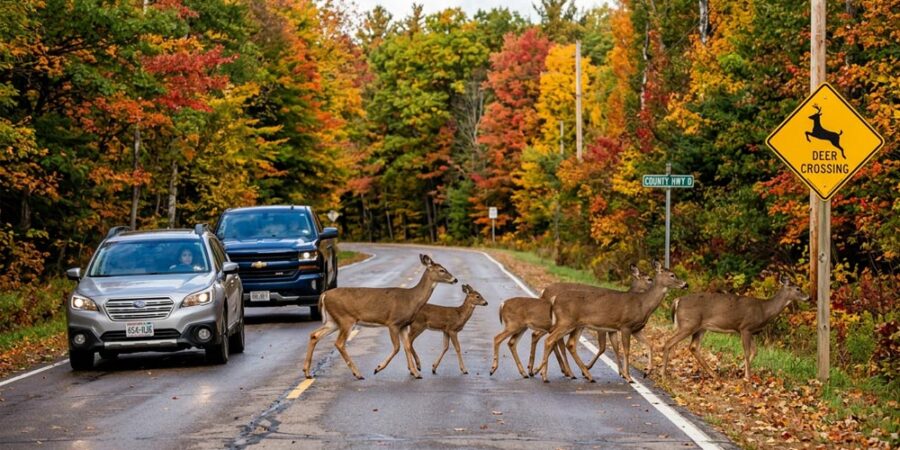
Wisconsin’s wooded landscapes, rural roads, and abundant wildlife make deer sightings common—especially during the fall mating season. A deer can appear suddenly, leaving drivers with only seconds to react.
Knowing when and where deer are most active, and how to respond safely, can help reduce the risk of a collision.
Know when deer are most active
Deer are active year-round, but the risk of a crash increases in Wisconsin during the fall, particularly from October through November. Deer are most likely to be moving around dawn and dusk, when visibility is also reduced. Stay especially alert during these times, and be cautious when driving near wooded areas, fields, waterways, and posted deer-crossing zones.
Slow down and scan ahead
Reduce your speed when driving through areas where deer are common. A slower speed gives you more time to identify an animal and respond safely. Scan both sides of the road—not just the lane ahead—and watch for reflective eyes or movement near the shoulder. Keep your focus well ahead so you can spot potential hazards early.
Expect more than one deer
Deer often travel in groups. If one deer crosses the road, slow down and look carefully for others that may follow. Do not immediately accelerate after a deer has passed. Continue slowly until you are confident the roadway is clear.
Use high beams responsibly
High beams can improve visibility on dark, rural roads when no vehicles are approaching. They may help you spot deer farther ahead, but use them responsibly and dim them for oncoming traffic or vehicles you are following. Even with high beams, continue driving at a speed that allows you to stop within the distance you can see.
What to do if a deer appears
If a deer enters the roadway, brake firmly and stay in your lane. Avoid swerving into oncoming traffic, a ditch, a tree, or another obstacle. Horns may sometimes startle a deer away, but sudden steering can create a more serious hazard. Keep both hands on the wheel, maintain control, and come to a complete stop if conditions allow.
Use your seat belt every trip
A seat belt is one of the most important protections in any crash. Make sure everyone in the vehicle is buckled before driving, and ensure children are secured in the correct car seat or booster seat for their size. Never sacrifice control of the vehicle by reaching for a phone, photographing wildlife, or trying to scare a deer away.
If you hit a deer
If a collision occurs, move to a safe location if possible and turn on your hazard lights. Call 911 if anyone is injured or the crash creates a roadway hazard. You should also report the collision to law enforcement and contact your insurance company. Do not approach an injured deer. It may be frightened and dangerous, even if it appears unable to move. Keep passengers inside the vehicle or at a safe distance while waiting for assistance.
Stay alert on Wisconsin roads
Deer accidents can happen quickly, but careful driving can reduce the risk. Slow down during dawn and dusk, scan both shoulders, watch for additional deer, and stay prepared to brake without swerving.
A few extra seconds of attention can help you arrive safely—and protect everyone sharing Wisconsin’s roads.
Should you or a family member be in an accident in which injuries are sustained, you may have a potential claim. The first thing you should do is contact a personal injury attorney. When a skilled attorney represents you, you’ll have your best chance of being fairly compensated for any injuries that you sustain in an accident.
Call Jacobson, Schrinsky & Houck in Milwaukee TODAY at (414) 223-4444 to have one of our caring lawyers come out to meet you. Get money for your injuries and car accident help TODAY. There is no fee until we win.
Car Accident Attorneys – Jacobson, Schrinsky & Houck – Experience – Compassion – Results
#JSHLaw #MilwaukeeCarAccidentLawyer #CarAccidentHelpToday #NoFeeUntilWeWin #Money4Injuries #JSHWins #JSHCanHelp #JustCallJSH #AreYouOK #OhDeer #DeerAccident #AvoidDeerAccident #WisconsinDeerAccident