






Car accidents can be stressful and disorienting, even if they’re minor.
Having a simple, clear checklist in mind can help you stay calm, protect everyone’s safety, and make sure you have the information you need for insurance and any legal issues.
Below is a practical car accident checklist you can follow.
1. Check for Injuries and Call for Help
• Check yourself first – Take a quick moment to see if you are hurt. Adrenaline can mask pain, so move slowly.
• Check passengers and others – Ask if everyone in your vehicle is okay. If you can do so safely, check on the occupants of the other vehicle(s) involved.
• Call 911 – If anyone is injured or if there is significant damage, call emergency services immediately. Even in a minor accident, it’s usually wise to contact the police so there’s an official report.
2. Move to Safety (If Possible)
• Reduce further danger – If the vehicles are drivable and it’s safe, move them to the side of the road or a nearby safe area. Turn on your hazard lights.
• Stay out of traffic – Do not stand in the roadway. If you must exit the vehicle, do so carefully, checking for oncoming traffic.
• Use safety gear – Set out reflective triangles or flares if you have them, and it’s safe to do so.
3. Call the Police
• Wait for officers to arrive – In many places, you are required to report accidents that involve injury, significant damage, or a hit-and-run.
• Stick to the facts – Explain what happened as clearly and calmly as you can. Avoid guessing or speculating; if you don’t know something, say so.
• Don’t admit fault at the scene – Even a simple “I’m sorry” can be interpreted as admitting fault. Fault will be determined later based on evidence, statements, and laws.
4. Exchange Information with the Other Driver
• Gather the following details from all drivers involved:
– Full name
– Phone number and email address
– Address
– Driver’s license number
– License plate number
– Vehicle make, model, and color
– Insurance company name
– Insurance policy number
Stay calm and polite. You do not need to discuss who was at fault or argue about what happened.
5. Document the Scene
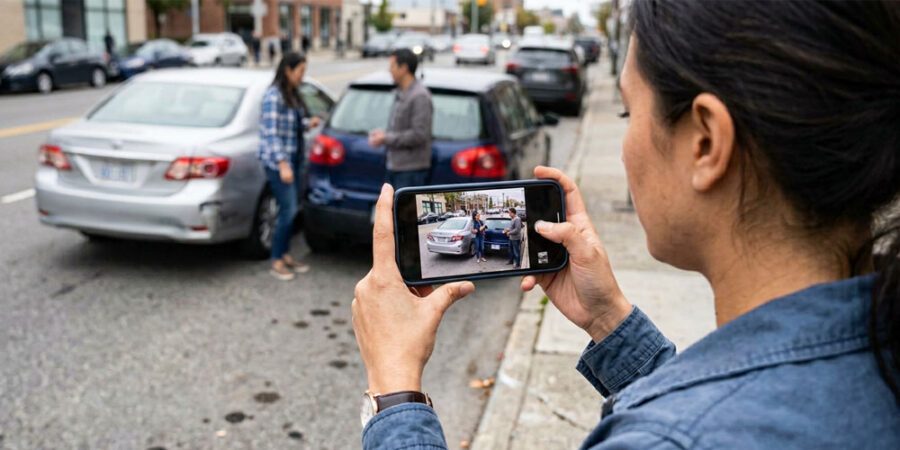
• Use your phone to collect as much information as you safely can.
Take photos and videos
– Entire scene from different angles
– Close-ups of damage to all vehicles
– Skid marks, broken glass, and debris
– Road signs, traffic lights, and lane markings
– Weather and road conditions (rain, ice, fog, etc.)
Note important details
– Date and time of the accident
– Location (street names, nearby landmarks, or GPS pin)
– Direction each vehicle was traveling
– Traffic conditions (heavy, light, construction zones, etc.)
Get witness information
– Names and contact information of any witnesses
– Ask if they are willing to give a statement to the police or your insurance company.
6. Avoid Problematic Statements
• In the confusion of a crash, it’s easy to say something that can hurt you later. Keep these guidelines in mind:
– Do not admit fault or accept blame.
– Avoid phrases like “I’m sorry,” “It was my fault,” or “I didn’t see you.”
– Don’t speculate about injuries (yours or anyone else’s) or damage.
– Don’t agree to “handle it privately” without insurance, especially if there could be hidden damage or injuries.
Stay courteous, but keep conversation limited to exchanging information and cooperating with the police.
7. Notify Your Insurance Company
• Report the accident as soon as you can – Many insurance policies require prompt reporting. Give them the basic facts of what happened.
• Share your documentation – Photos, videos, witness contacts, and the police report number (if available) can help your claim.
• Understand your coverage – Ask about rental car coverage, deductibles, and how repairs will be handled.
8. Seek Medical Attention
• Get checked even if you feel fine – Some injuries (like whiplash, concussions, or internal injuries) may not show symptoms right away.
• Follow up with your doctor – If you notice new pain, headaches, dizziness, numbness, or other symptoms in the days after the crash, see a medical professional promptly.
• Keep records – Save all medical reports, bills, prescriptions, and recommendations related to the accident.
9. Keep Organized Records
• Create a folder (physical or digital) for all accident-related information:
– Police report and case number
– Photos and videos
– Medical records and bills
– Estimates and invoices for vehicle repairs
– Communication with your insurance company
– Any time off work or wage loss documentation
– Good records make it easier to handle insurance claims and any legal issues that may arise.
10. Consider Legal Advice
You may want to speak with Jacobson, Schrinsky & Houck if:
– There are serious injuries.
– Fault is disputed.
– The insurance company denies your claim or offers a very low settlement.
– Multiple vehicles or commercial drivers are involved.
We can help explain your rights and options, and communicate with insurers on your behalf.
Should you or a family member be in a car accident in which injuries are sustained, the first thing you should do is contact a personal injury attorney. When a skilled attorney represents you, you’ll have your best chance of being fairly compensated for any injuries that you sustain in an accident.
Call Jacobson, Schrinsky & Houck in Milwaukee TODAY at (414) 223-4444 to have one of our caring lawyers come out to meet you. Get money for your injuries and car accident help TODAY. There is no fee until we win.
Car Accident Attorneys – Jacobson, Schrinsky & Houck – Experience – Compassion – Results
#jshlaw #caraccidenthelptoday #nofeeuntilwewin #money4injuries #milwaukeecaraccidentlawyer #accident #jshwins #heretohelp #areyouok #checklist #caraccidentchecklist