






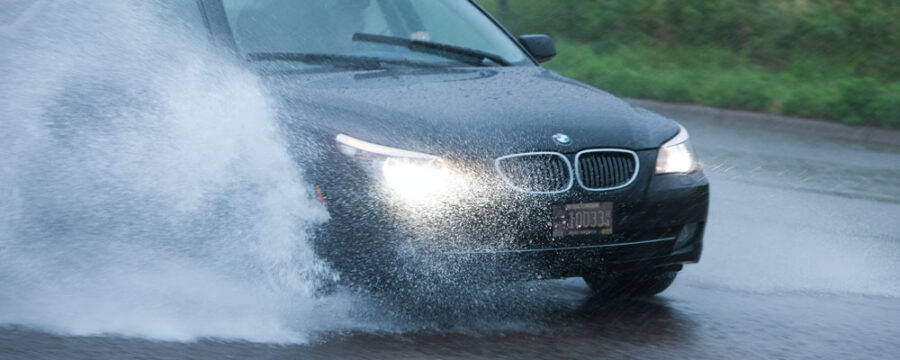
Hydroplaning, or aquaplaning, is a dangerous driving condition that occurs when water causes your car’s tires to lose contact with the road surface.
Whether it lasts for an instant or several seconds, hydroplaning is a jolting indication that you’ve lost all the available traction. In those moments, you are for all intents and purposes a passenger. It’s scary. Here’s how it happens, how to avoid it, and what to do when your car hydroplanes.
What Causes Hydroplaning?
Hydroplaning is most likely to happen during, or just after, periods of heavy rainfall when there is a build-up of surface water on the road. It can also happen when driving on uneven patches of road where large puddles of standing water can collect.
Why is Tire Tread Depth Important?
The primary job of the tread pattern in your vehicle’s tires is to expel water, maintaining contact with the road surface to provide grip and traction. Think of the grooves in your tires as miniature aqueducts. They pump water away from the contact patch (where the rubber literally meets the road) at an amazing rate. If tread depth is inadequate, the tire can expel less water, even at slower speeds, meaning the risk of hydroplaning is higher.
Tires become much more likely to hydroplane with a tread depth less than 3mm, meaning it is advisable to monitor the tread regularly and closely. When it gets below this point, although still legal, the tread is much more likely to affect handling and safety in wet conditions. Have you ever driven through a large puddle that was much deeper than you anticipated, only to feel the steering wheel go light in your hands? That sudden loss of feedback is how you experience hydroplaning.
Why is Tire Pressure Important?
Incorrect tire pressures can result in under and over inflation of a tire. The reason this is important is because, in both instances, less of the tire’s tread is in contact with the road. The less tread, the less grip you have and the higher the chance of hydroplaning.
Checking your tires pressure regularly is important, especially during the colder months. You can find what pressure your vehicles tires need to be in the manufacturers handbook.
How Do I Avoid Hydroplaning?
The best way to deal with hydroplaning, and to avoid it happening altogether, is by ensuring your tires have adequate tread depth and the correct air pressure. You can do this by performing monthly tire checks, plus extra checks before long journeys.
Regardless of whether you have brand new tires or a more worn-down tread, all drivers should slow down in wet conditions to reduce the risk of hydroplaning. As a general rule of thumb, you should reduce your speed by a third, so if the speed limit is 70, reduce it to 47. Also, try to avoid standing water when you safely can.
What Should I Do if My Vehicle Hydroplanes?
In the event that your vehicle hydroplanes, it is advised that drivers just slow down. Hold your hands firmly on the wheel and avoid braking suddenly. Any sudden movements may be exacerbated when hydroplaning.
If there is a danger of you colliding with someone or something, however, drivers should attempt to emergency brake once and once only. In the majority of scenarios, the rear tires should have just enough grip to slow the vehicle down and keep you safe. Whether you’re on a straight or curved road, you have a much higher chance of recovering from hydroplaning if you stay calm and make the right moves.
With enough preparation and common sense, you can prevent hydroplaning, or at least be ready to deal with it when it happens.
Should you or a family member be in an accident which injuries are sustained, the first thing you should do is contact a personal injury attorney. When you are represented by a skilled attorney, you’ll have your best chance of being fairly compensated for any injuries that you sustain in an accident.
Call Jacobson, Schrinsky & Houck in Milwaukee TODAY at (414) 223-4444 to have one of our caring lawyers come out to meet you. Get money for your injuries and car accident help TODAY. There is no fee until we win.
Car Accident Attorneys – Jacobson, Schrinsky & Houck – Experience – Compassion – Results
#jshlaw #caraccidenthelptoday #nofeeuntilwewin #money4injuries #milwaukeecaraccidentlawyer #accident #jshwins #heretohelp #hydroplaning #aquaplaning #drivingtips #staycalm #slowdown